Another Word for Affected: 30 Synonyms With Examples
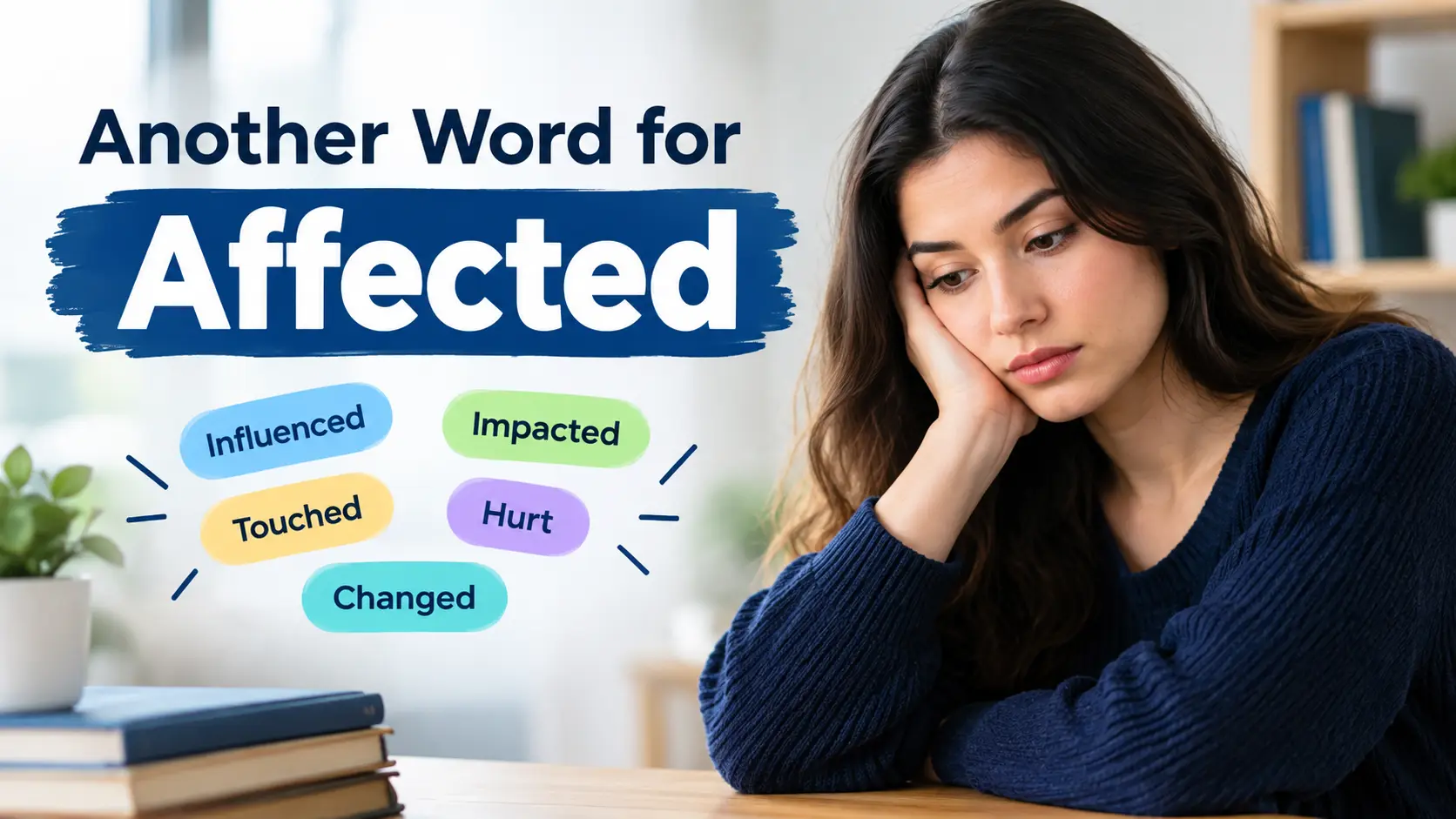
Another word for affected depends on which meaning you need. The closest everyday alternatives are influenced and impacted.Choose hit, damaged, or harmed when referring to harm. For feelings, use moved or touched. For fake or showy behavior, use artificial or pretentious.
“Affected” can describe something changed by an outside force, a body part troubled by illness, a person moved by emotion, or a manner that is not natural. One word will not fit all of these, so the right choice depends on the sentence.
Quick list: influenced, impacted, hit, damaged, harmed, afflicted, moved, touched, artificial, pretentious
This article looks at 30 alternatives. Each one has a meaning, IPA, a usage note, and an example. Some are direct synonyms and some are related words that fit only certain contexts.
At a Glance: Affected Synonyms and Related Alternatives
| Alternative | Part of Speech | Meaning | Register / Tone | Ideal Context |
| Influenced | Adjective / past participle | Changed or guided by something | Neutral | Opinions, choices, style |
| Impacted | Adjective / past participle | Strongly affected by an event or change | Neutral to business | News, business, planning |
| Hit | Adjective / past participle | Badly affected by a harmful event | Informal | Storms, prices, crises |
| Damaged | Adjective | Harmed or broken in part | Neutral | Objects, places, reputation |
| Afflicted | Adjective | Suffering from illness or trouble | Formal | Disease, hardship |
| Moved | Adjective | Emotionally affected | Neutral | Speeches, stories, music |
| Touched | Adjective | Gently affected in feeling | Warm | Kind acts, gifts, praise |
| Concerned | Adjective | Involved in or touched by something | Formal | Official notices |
| Artificial | Adjective | Not natural or sincere | Neutral to critical | Manner, smile, voice |
| Pretentious | Adjective | Trying to seem more important than one is | Critical | Speech, style, attitude |
Which Word Should You Use?
| If you want to… | Use | Why |
| Say something was changed by an outside factor | influenced | It is neutral and works in many settings. |
| Describe the effect of a policy or event in work writing | impacted | It is common in news and business English. |
| Say a place or group suffered from a harmful event | hit | It is short and clear, and it suggests a sudden blow. |
| Describe physical or lasting harm | damaged | It points to something broken or reduced in value. |
| Describe illness that has struck a person or body part | afflicted | It is formal and suits medical or serious contexts. |
| Say a story or speech made you feel something | moved | It names the emotional effect directly. |
| Say a small, kind act warmed you | touched | It is gentler than “moved.” |
| Describe a fake or showy way of speaking | pretentious | It names the problem: trying to seem grander than you are. |
| Refer to people involved in an official matter | concerned | It is the standard formal choice in notices. |
Exploring the Multiple Meanings of “Affected”
1. Influenced or Changed by Something
- Meaning: Acted on by an outside force, so that something is different.
- Explanation: This is the broadest and most neutral sense. It does not say If the change is good or bad. In official writing, “affected parties” or “affected users” means the people or groups the change touches.
- Example: Her choice of college was affected by her older sister’s advice.
2. Harmed or Damaged
- Meaning: Hurt, disrupted, or made worse by an event or condition.
- Explanation: Here “affected” usually carries a negative meaning even though the word itself is neutral. Phrases like “the affected area” or “badly affected” often point to harm.
- Example: Several villages were badly affected by the flood.
3. Struck by Illness
- Meaning: Having a disease or medical problem.
- Explanation: Doctors often use “affected” to name the part of the body involved, as in “the affected leg.” The phrase “affected with” can introduce the illness itself.
- Example: The doctor asked her to keep the affected arm still.
4. Emotionally Moved
- Meaning: Made to feel strong emotion.
- Explanation: This sense is common in the pattern “deeply affected by.” It is more serious than “touched” and can include sadness, shock, or sympathy.
- Example: He was deeply affected by the news of his friend’s illness.
5. Artificial or Showy
- Meaning: Not natural or sincere, as if put on to impress.
- Explanation: This sense is critical and usually describes manner, speech, or style. It has a different history from the “influenced” senses.
- Example: She spoke in an affected accent that nobody believed.
Sources: Merriam Webster; Collins Dictionary; Dictionary.com; Etymonline.
Analyzing 30 Affected Alternatives in Detail
Some of these alternatives are direct synonyms of “affected” in one sense, while others are related words that fit only certain contexts. Each Usage note says which is which.
Group 1: General Influence and Change
The word “affected” has several everyday alternatives, depending on the context. These words describe how someone or something experiences influence, change, or persuasion.
1. Influenced
IPA: US /ˈɪnfluənst/ · UK /ˈɪnflʊənst/
Definition: Guided, shaped, or changed by someone or something.
Usage: This neutral, common synonym works well for opinions, choices, behavior, and style. However, it does not usually describe physical harm.
Example: The town’s design was influenced by older European cities.
2. Impacted
IPA: /ɪmˈpæktɪd/
Definition: Affected by an event, action, or change.
Usage: This word often appears in business and news writing. It can suggest a significant effect, although “affected” is sometimes simpler and more natural.
Example: Small shops were impacted by the new parking rules.
3. Altered
IPA: US /ˈɔːltərd/ · UK /ˈɔːltəd/
Definition: Made different in some way.
Usage: Use “altered” when something has undergone a noticeable change rather than simply experienced an effect.
Example: The long trip altered her view of the world.
4. Swayed
IPA: /sweɪd/
Definition: Persuaded to change an opinion or decision.
Usage: This word specifically describes influence over someone’s judgment or choices.
Example: The jury was swayed by the witness’s calm voice.
5. Shaped
IPA: /ʃeɪpt/
Definition: Given a particular form or character over time.
Usage: “Shaped” is useful when describing the long-term development of people, ideas, or places.
Example: Her views were shaped by years of work abroad.
6. Colored
IPA: US /ˈkʌlərd/ · UK /ˈkʌləd/
Definition: Influenced in a way that changes perception or judgment.
Usage: This figurative word often describes how emotions or experiences affect someone’s perspective.
Example: His opinion of the city was colored by one bad visit.
Group 2: Harm and Damage
7. Hit
IPA: (US and UK) /hɪt/
Definition: Badly affected by a harmful event or condition.
- Usage: This is a close synonym for the “harmed” sense. It is informal and common in the news. It suggests a sudden or serious blow.
- Example: Farmers were hit hard by the dry summer.
8. Damaged
IPA: (US and UK) /ˈdæmɪdʒd/
Definition: Harmed in a way that lowers value, use, or condition.
- Usage: This is a close synonym when the effect is physical or lasting. It also works figuratively, as in a damaged reputation. It does not work for neutral effects.
- Example: The storm left the roof damaged.
9. Harmed
IPA: US /hɑːrmd/ · UK /hɑːmd/
Definition: Hurt or injured.
- Usage: This is a close synonym for negative effects on people, animals, or things. It is stronger and more direct than “affected.”
- Example: The chemical spill harmed local wildlife.
10. Hurt
IPA: US /hɜːrt/ · UK /hɜːt/
Definition: Suffering pain or damage, physical or emotional.
- Usage: This is a related alternative that is more personal and informal. It can describe feelings or money losses. It is not used for neutral changes.
- Example: Many families were hurt by the rise in prices.
11. Battered
IPA: US /ˈbætərd/ · UK /ˈbætəd/
Definition: Damaged by repeated blows or hard conditions.
- Usage: This is a related, more vivid alternative. It fits places and economies hit repeatedly. It sounds stronger than ordinary “affected.”
- Example: The coast was battered by three storms in a month.
12. Ravaged
IPA: (US and UK) /ˈrævɪdʒd/
Definition: Badly damaged or destroyed.
- Usage: This is a related, strong alternative for severe destruction. It suits formal writing and news about disasters, war, or disease. Use it only when the harm is very serious.
- Example: The region was ravaged by years of drought.
Group 3: Illness and Suffering
13. Afflicted
IPA: (US and UK) /əˈflɪktɪd/
Definition: Suffering from something painful or troubling, such as illness.
- Usage: This is a close synonym for the “struck by illness” sense. It is formal and a little serious. It is often used with “with” or “by.”
- Example: Many people in the area were afflicted with fever.
14. Infected
IPA: (US and UK) /ɪnˈfektɪd/
Definition: Containing germs that cause disease.
- Usage: This is a related alternative, narrower than “affected.” Use it only when germs or a disease are involved. It would be wrong for emotional effects.
- Example: The infected wound needed a doctor’s care.
15. Stricken
IPA: (US and UK) /ˈstrɪkən/
Definition: Seriously affected by illness, trouble, or strong emotion.
- Usage: This is a close synonym in a formal or literary tone. It suggests a sudden or heavy effect. It is often used in compounds like “grief stricken.”
- Example: The stricken town waited for help.
16. Plagued
IPA: (US and UK) /pleɪɡd/
Definition: Repeatedly troubled by something unpleasant.
- Usage: This is a related alternative that suggests a repeated or ongoing problem. It fits problems like pests, illness, or doubts. A single event would not be described this way.
- Example: The team was plagued by injuries all season.
17. Troubled
IPA: (US and UK) /ˈtrʌbəld/
Definition: Worried, disturbed, or affected by difficulties.
- Usage: This is a related alternative for people and situations facing problems. It is less medical than “afflicted.” It leans toward worry.
- Example: She looked troubled after reading the letter.
Group 4: Emotional Response
18. Moved
IPA: (US and UK) /muːvd/
Definition: Having strong feelings stirred in you, often sadness or sympathy.
- Usage: This is a close synonym for the emotional sense. It is neutral to warm and fits speeches, films, and music. It is almost always positive or sympathetic.
- Example: The audience was moved by her story.
19. Touched
IPA: (US and UK) /tʌtʃt/
Definition: Feeling warm gratitude or sympathy.
- Usage: This is a close synonym in a gentle sense. It is lighter than “moved” and fits small kind acts. It does not suit shock or deep grief.
- Example: I was touched by your kind note.
20. Stirred
IPA: US /stɜːrd/ · UK /stɜːd/
Definition: Having emotions or memories brought to the surface.
- Usage: This is a related alternative. It suggests feelings being awakened and is slightly literary. It often goes with “emotions” or “memories.”
- Example: The old song stirred memories of home.
21. Shaken
IPA: (US and UK) /ˈʃeɪkən/
Definition: Upset or shocked, especially after something frightening.
- Usage: This is a related alternative for strong, negative reactions. It fits accidents and bad news. It is stronger than “affected.”
- Example: He was shaken by the near accident.
22. Upset
IPA: (US and UK) /ʌpˈset/
Definition: Unhappy, worried, or disturbed.
- Usage: This is a related, everyday alternative for negative emotional effects. It is common in speech. It can be mild or strong, depending on context.
- Example: She was upset by the sudden change of plans.
Group 5: Artificial or Showy Manner
23. Artificial
IPA: US /ˌɑːrtɪˈfɪʃl/ · UK /ˌɑːtɪˈfɪʃl/
Definition: Not natural or sincere.
- Usage: This is a close synonym for the “showy manner” sense. It works for smiles, voices, and behavior. In other contexts it means “man made,” so the sentence should make the meaning clear.
- Example: His artificial laugh made everyone uncomfortable.
24. Pretentious
IPA: (US and UK) /prɪˈtenʃəs/
Definition: Trying to seem more important, clever, or cultured than one really is.
- Usage: This is a close synonym in a critical tone. It fits speech, writing, and style. It is stronger and more judging than “affected.”
- Example: The menu was full of pretentious French words.
25. Mannered
IPA: US /ˈmænərd/ · UK /ˈmænəd/
Definition: Marked by an unusual or overly deliberate style.
- Usage: This is a related alternative used mostly for art, writing, and speech. It is more formal than “pretentious.” It can be neutral or mildly critical.
- Example: The actor’s mannered delivery felt old fashioned.
26. Unnatural
IPA: (US and UK) /ʌnˈnætʃrəl/
Definition: Different from what is normal or expected, often in a forced way.
- Usage: This is a related alternative that is plainer and less judging. It points to something that feels forced. It does not suggest pride or showing off.
- Example: Her voice sounded unnatural on the phone.
27. Contrived
IPA: (US and UK) /kənˈtraɪvd/
Definition: Created in a forced way, not occurring naturally.
- Usage: This is a related alternative for plans, plots, and behavior that seem planned for effect. It is formal and critical. It is less about showing off than about looking forced.
- Example: The reunion scene felt contrived.
Group 6: Context Specific Alternatives
28. Concerned
IPA: US /kənˈsɜːrnd/ · UK /kənˈsɜːnd/
Definition: Involved in or having a connection to something.
- Usage: This is a related alternative for official or legal wording, as in “all concerned.” It does not mean “harmed.” It only identifies the people connected to the matter.
- Example: The sender sent the letter to everyone concerned.
29. Involved
IPA: US /ɪnˈvɑːlvd/ · UK /ɪnˈvɒlvd/
Definition: Taking part in or connected with something.
- Usage: This is a related alternative. It names participation, not effect. It can replace “affected” only in phrases like “the people involved.”
- Example: Everyone involved in the project received a copy.
30. Compromised
IPA: US /ˈkɑːmprəmaɪzd/ · UK /ˈkɒmprəmaɪzd/
Definition: Weakened or made less safe or effective.
- Usage: This is a related alternative for health, security, and quality. It suggests that something has become less reliable. It appears in phrases like “compromised immune system.”
- Example: The breach compromised the data.
Sources: Merriam Webster; Collins Dictionary and Collins Thesaurus; Dictionary.com; Etymonline.
Affected vs. Effected vs. Afflicted
Learners often confuse “affected” with similar looking words. This table shows the difference.
| Word | Core Meaning | Example |
| Affected | Influenced, harmed, or moved; also showy | The noise affected her sleep. |
| Effected | Brought about or caused to happen | The manager effected major changes. |
| Afflicted | Suffering from illness or trouble | He was afflicted with a bad cough. |
“Effected” comes from the verb effect, meaning “to bring about.” Etymonline notes that people have used “effected” by mistake for “affected” since the early 15th century. If you can replace the word with “caused to happen,” use “affected. If you mean “influenced” or “harmed,” use affected.
Sources: Merriam Webster; Collins Dictionary; Etymonline.
Affected and Opposite/Paired Word Pairs
| Word | Paired Word | Note |
| Affected (influenced) | Unaffected | The most direct opposite: not changed or harmed. |
| Affected (harmed) | Unharmed | Used for people, animals, and things after an event. |
| Affected (emotional) | Unmoved | Means feeling no strong emotion. |
| Affected (showy) | Natural | Describes a manner that is sincere and not put on. |
| Affected (showy) | Genuine | Suggests honest, real behavior. |
| Affected (showy) | Unaffected | Here it also means natural and sincere. |
“Unaffected” is the main opposite, but it has two uses. It can mean “not influenced or changed,” and it can mean “natural and without pretense.” The context tells you which one is meant.
Sources: Merriam Webster; Collins Dictionary; Etymonline.
Common Word Partners of “Affected”
| Pattern | Common Partners | Example |
| Adverb + affected | badly, severely, seriously, deeply, directly, indirectly | The region was severely affected by the storm. |
| most / worst affected | areas, countries, regions, communities | The worst affected areas received aid first. |
| affected + noun | area, person, people, parties, users, communities | The doctor examined the affected area. |
| affected by + noun | weather, change, news, illness, decision | Flights were affected by fog. |
| affected + manner word | accent, voice, manner, style, tone, air | He spoke in an affected tone. |
| affected with + illness | a disease, a condition | The patient was affected with a rare condition. |
Sources: Merriam Webster; Collins Dictionary; Dictionary.com.
Idiomatic Phrases Featuring “Affected”
“Affected” has very few true idioms. The phrases below are strongly established expressions, not figurative idioms.
1. Affected parties
- Meaning: The people or groups who are touched by a decision, rule, or event.
- Example: The company will contact all affected parties by email.
2. The affected area
- Meaning: The place or body part that damage or illness affects.
- Example: Rescue teams entered the affected area on Monday.
3. An affected air (or manner)
- Meaning: A person acts in a certain way to impress others.
- Example: He had an affected air that made him hard to like.
4. Badly affected
- Meaning: Hit hard or harmed by something.
- Example: The floods badly affected coastal towns.
Sources: Merriam Webster; Collins Dictionary; Dictionary.com.
Word Formation of “Affected”
Etymology & Structure
“Affected” is the past participle form of the verb affect, made by adding ed. English has two different spellings. The first means “to act on or influence.” The second means “to pretend or put on manners.” Both come from Latin afficere, “to do something to, act on, influence.” The second verb came through Latin affectare, “to strive after,” and Old French afecter. Because the two verbs developed side by side, their meanings sometimes overlap.
Date and History
Etymonline records “affected” meaning “favorably disposed” in the 1530s. That sense is now obsolete, but it survives in disaffection. The sense “artificially displayed” appears in the 1580s. The sense “under the influence of afflicted” appears from the 1610s. Etymonline dates the verb meaning “to make a mental impression on” to the 1630s, and an earlier verb meaning “act upon, infect” to the early 15th century.
Word Class Variations
- Verb: affect (two verbs, with different meanings)
- Adjective: affected, affecting, unaffected
- Adverb: affectedly, unaffectedly
- Noun: affectation (a showy manner), affectedness, affect (mainly a term in psychology)
- Related derivative: disaffected
Sources: Etymonline (entries for affected, affected, unaffected); Merriam Webster; Collins Dictionary.
Common Word Choice Mistakes
- The storm affected the town: use affected (influenced or harmed). Effected means “brought about.”
- The law will affect small shops: remove “to.” Affect takes a direct object: “affect small shops.”
- The floods impacted many families: use affected or impacted without “to.”
- The sad news deeply affected him. Infected is for germs and disease.
- She has an affected kindness that touched us all: use genuine or unaffected. “Affected” suggests a fake manner.
- The affected from the disease: say “afflicted with” or “affected by” the disease.
- The changes impacted the entire team.
- Do you like this personality?
Frequently Asked Questions
What is the closest synonym for “affected”?
The closest general synonyms include influenced and impacted. Both fit the broad sense of “changed by something.”
What is a formal alternative to “affected”?
Afflicted is formal for illness or trouble, and concerned is formal in official notices. Impact is common in business writing.
What is a word for being emotionally affected?
Moved is the closest. Touching is gentler, and shaking is stronger and more negative.
What is another word for “affected” in a negative sense?
Hit, damaged, harmed, and hurt all show harm, with different strength.
What is the opposite of “affected”?
The main opposite is unaffected. Other opposites depend on the sense, such as unharmed, unmoved, or natural.
What is the difference between “affected” and “effected”?
“Affected” means influenced or harmed. “Effected” means brought about or caused to happen.
Can “affected” mean fake?
YesIn this sense, people use a manner or style to impress others, as in “an affected accent.”
Is “affected” the same as “infected”?
No. “Infected” means containing germs that cause disease. “Affected” is broader and can describe any kind of effect.
Can “affected” describe a body part?
Yes. Doctors use “the affected area” or “the affected arm” for the part touched by illness or injury.
Is “Impacted” a Good Replacement for “Affected”?
Often, yes, especially in news and business writing. In plain speech or formal essays, “affected” may sound more natural.
Conclusion
The closest everyday alternatives to “affected” are influenced and impacted. When referring to harm, common alternatives include hit, damaged, and harmed.
For feelings, moved and touched fit best, and for a showy manner, artificial and pretentious work well.
Context matters because “affected” has several meanings. Some alternatives describe illness, some describe emotion, and some describe a fake style. A word that fits one sense may be wrong in another.
To choose well, first decide which meaning you want: change, harm, illness, emotion, or false manner. Then pick the word with the right strength and tone for your reader.

Noman is the founder and author of Factwy.com, where he shares informative, useful, and easy-to-understand content. With a passion for research and writing, he creates articles that simplify complex topics and provide valuable insights. His goal is to deliver clear, accurate, and reader-friendly information that helps visitors learn something new every day.